Category: Society & Culture

  • When Your Planner Knows Too Much…

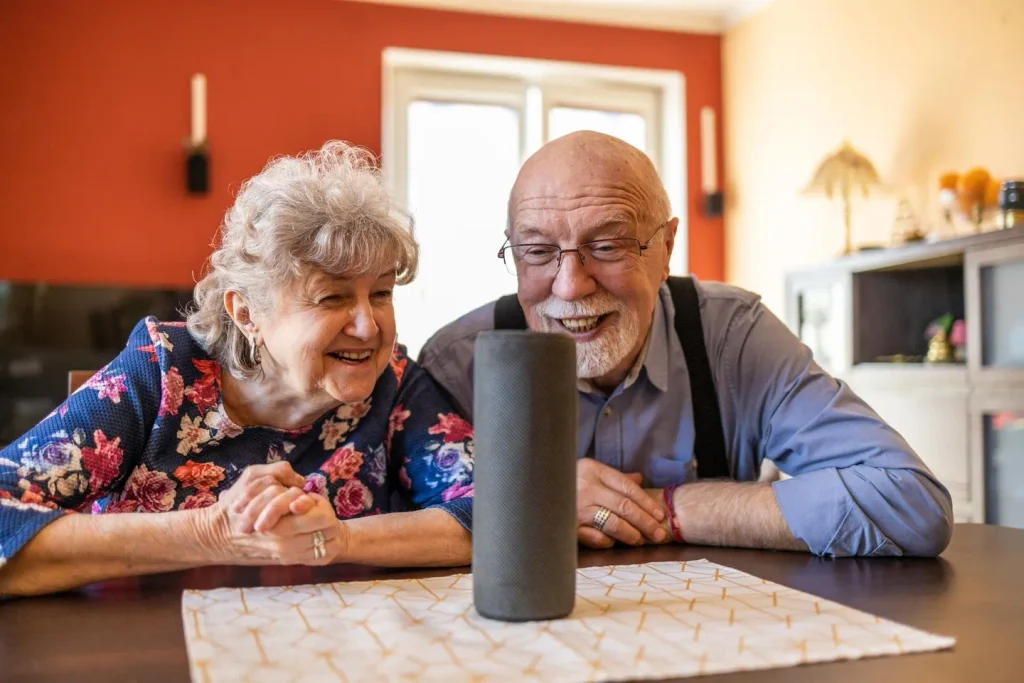
    Even organizing our daily lives is no longer a simple matter of writing things down in a diary. We now have intelligent planner apps that promise to remember everything for us, organize our schedules, manage our priorities, and generally make us more efficient human beings. It sounds wonderful, doesn’t it?
    Copyright @ Stock-Asso. Source: Shutterstock

    After all, who wouldn’t appreciate a little help keeping track of appointments, birthdays, shopping lists, bills, and all those countless little things that seem to accumulate as we get older?

    But there is another side to this increasingly popular technology. Some AI-powered planner apps have raised questions about how much personal information users are sharing, who gets access to it, and what happens to the private details of our lives once they enter the digital world.

    One example is Planye, whose privacy disclosures describe how information shared with its AI assistant may be processed by external service providers.

    Now, I’m not suggesting that every planner app is doing something sinister. But I do think we need to ask a few questions before handing over the contents of our lives to a clever little piece of software. There is something rather unsettling about the idea that an app designed to help us organize our lives might also become a record of our most personal information.

    And that brings me to the us, older generation 😉

    I grew up in a world where organizing your life meant keeping a diary, writing appointments on a calendar, and perhaps sticking a shopping list on the refrigerator (and I still do all of those things). If you wanted to remember someone’s birthday, you wrote it down. If you had an important appointment, you circled the date. It isn’t particularly sophisticated, but it worked. And, more importantly, nobody was collecting our information.

    When my children first started encouraging me to use digital planners, I have to admit I was a little sceptical. They seemed to think that everything in life could be solved by downloading an app. Whenever I mentioned forgetting an appointment or misplacing a shopping list, one of them would immediately suggest another clever little application. “Mum, you really should try this. It does everything for you!” And so, being a reasonably cooperative mother, I gave it a go.

    At first, I needed quite a bit of help. They patiently showed me how to download the app, create an account, set reminders, and synchronize everything with my phone. I remember one afternoon sitting at the kitchen table with one of them, trying to work out why my appointments weren’t appearing where they were supposed to. After several attempts, a few exasperated sighs, and rather more instructions than I cared to remember, we finally got it working! I was simply relieved that I hadn’t accidentally signed up for something I couldn’t get out of!

    Before long, I was entering appointments, making lists, and experimenting with reminders. It was quite satisfying, actually. I could see why younger people loved these things. Everything was in one place, and I no longer had to rummage through handbags looking for a scrap of paper with someone’s telephone number scribbled on it. My children were rather pleased with themselves, too. They had successfully brought their prehistoric mother into the digital age.

    But then came the subscriptions, the permissions, the endless notifications, and all those little boxes asking me to agree to things I didn’t entirely understand. Whenever I asked my children what something meant, they would casually tell me to click yes and carry on.

    “It’s fine, Mum. Everyone does it.”

    Well, perhaps everyone does, but that doesn’t necessarily make it a good idea.

    One day, I started wondering just how much information these apps were collecting. I had entered personal appointments, family birthdays, reminders about bills, and various private notes. Nothing particularly exciting, but certainly nobody else’s business. It occurred to me that my little digital diary might know rather more about my everyday life than some of my friends and family did.

    We are encouraged to put everything into our phones. We are told that technology will make everything easier, and perhaps it does, I think.

    But I sometimes wonder whether we’ve become a little too trusting.

    And I’m certainly not alone. Many women in their sixties and seventies are learning to navigate a world that has become almost entirely digital. We learn to shop online, pay bills electronically, arrange medical appointments through portals, and communicate with family through Facebook.

    Some of us have become quite proficient I would say.

    But the truth is that we have little choice. There is also something to be said for the way these apps encourage us to become increasingly dependent on them. We have reminders for appointments, reminders to exercise, reminders to drink water, reminders to take breaks, and reminders to go to bed.

    Good grief! Whatever happened to simply living?

    The world has moved on, and we have to move with it. What concerns me is that convenience seems to come with an ever-growing price.

    I remember when my children were little, I had an entire household to organize without the assistance of an electronic device. School runs, shopping, meals, appointments, birthdays, homework, and all the usual family chaos. Somehow, I managed to keep everything going with a wall calendar, a notebook, and a reasonably good memory.

    I certainly wasn’t always organized, but I don’t recall needing an app to tell me when to put the washing on.

    Perhaps I’m being unfair. Life has become more complicated, and technology genuinely can make things easier. I appreciate that. But I also think we have reached a point where convenience sometimes comes at the expense of common sense.

    And what about our privacy?

    When I was younger, if I wanted to tell someone something personal, I chose whom to tell. If I wrote something in my diary, it stayed in my diary. I didn’t have to wonder whether a third-party company might process it, store it, or use it in ways I hadn’t anticipated.

    Nowadays, we click through pages of terms and conditions without reading them. We grant permissions because we want to get on with whatever we were trying to do in the first place.

    I suspect many younger people do exactly the same.

    My children are considerably more comfortable with technology than I am. They can navigate applications, change settings, synchronize devices, and troubleshoot problems without batting an eyelid. But even they don’t always have the patience to read the small print.

    Perhaps they see it differently. They are accustomed to apps knowing where they are, what they like, what they buy, and what they search for. Sharing information has become part of everyday life. For those of us who remember a time when privacy was simply the natural state of affairs, this can feel like a rather extraordinary change.

    I don’t particularly want an app knowing everything about me. I certainly don’t need an artificial intelligence assistant reminding me that I’m supposed to be productive, exercise more, drink more water, and get to bed earlier.

    I’m quite capable of feeling guilty about all those things without technological assistance!

    There is also something to be said for doing things the old-fashioned way. As I said, I do still appreciate writing things down, making notes in the margins, and keeping a little control over my own schedule. There is a certain pleasure in opening a notebook and seeing your own handwriting rather than being greeted by another notification.

    Perhaps I’m old-fashioned. But I don’t think wanting something only for myself is old-fashioned at all.

    Technology should be there to serve us, not the other way around. And while I appreciate that AI can help us manage increasingly complicated lives, I would like to think that we can still decide what information we share and what we prefer to keep to ourselves.

    My advice? Before downloading the latest clever planner promising to transform your life, take a moment to read its privacy policy. Find out what information it collects, whether it shares data with outside companies, and how you can delete your information if you decide to leave.

    Because organizing your life should not mean giving someone else a window into every corner of it.

    I’ll keep my calendar, my shopping lists, and my little notebook for now. At least I know exactly where they are, and nobody needs a password to read them.

    And if I forget an appointment, well, that’s my business!

  • Into the New Era of Dating…

    I have stumbled upon some news that Tinder hopes to match with Gen Z by borrowing some credibility from TikTokers. Dating has entered a new era, one in which romance is increasingly shaped by algorithms, curated profiles, and the influence of social media. Tinder’s decision to partner with TikTok creators reflects a growing awareness that younger generations need more than an app promising endless possibilities; they need a reason to trust it. By turning dating into a story that audiences can follow, discuss, and relate to, Tinder attempts to make digital romance feel more personal and less transactional.

    The campaign acknowledges a paradox of modern life: although Gen Z has unprecedented opportunities to meet people online, many young adults are becoming tired of swiping and are looking for more meaningful, authentic connections.

    Yet, when the promotion of romance relies on influencers and carefully packaged personal experiences, we must ask where authenticity ends and marketing begins. Is social media helping young people rediscover the excitement of dating, or is it simply teaching them to consume romance as another form of content?

    But there is another side to this door, one that becomes more visible when we look at modern dating from the perspective of an older generation.

    Having grown up in a world where relationships often began through shared environments, spontaneous conversations, and face-to-face encounters, we may see today’s dating culture as both fascinating and unsettling. Dating apps offer convenience, access, and opportunities to connect beyond familiar social circles, but they can also transform people into profiles to be evaluated, compared, and discarded with a single swipe. For a generation accustomed to building intimacy gradually, the speed of digital courtship can feel at odds with the patience and vulnerability that lasting relationships require.

    At the same time, it would be unfair to romanticize the past: meeting in person never guaranteed sincerity, compatibility, or commitment. Perhaps the real difference is not that young people have forgotten how to love, but that they are learning to navigate love in an environment where attention is abundant and genuine connection can feel scarce.

    So I’ve spent the past six months exploring some online dating apps.

    I knew it was possible to meet and fall in love with someone you met online; I’d met my wonderful late husband on a site, ten years ago. Both of us wrote simple, honest profiles that stated who we were and what we were looking for. We wrote back and forth on the site, exchanged phone numbers, enjoyed some sweet conversation, met in person, married four months later. Looking back, it was a pretty straight line from A to B: write, phone, meet, court, marry.

    Even then, I did encounter some players, guys looking for a quick hookup. Jon was different. He knew exactly what he wanted and politely expressed interest in marrying me on our first date. His communication was tactful and calm, but very direct. We weren’t playing games.

    Both of us were honest about our intentions and our situations. We compared baggage, decided it would work, met each others’ friends and families, and took the plunge. And for the next eight years, it was a wonderful marriage. We loved each other, my kids loved him, life was good.

    Until he got sick, and became paralyzed, and rapidly went downhill. All too soon, I was alone again, grieving, wandering in a fog. It took another year to realize Jon would want me to go back out there and try again.

    At first, I was hopeful, remembering how Jon and I had met.

    I quickly discovered online dating had degenerated into something much worse than what I’d encountered ten years ago. There weren’t just players and liars. Now, scammers had taken over the market.

    During the first few months, I figured out most of the men who contacted me weren’t who they claimed to be. Their profile said they were from the East Coast, working for an American company, but they didn’t write or speak as an American would. Their phrases were off, their cadence just “wrong.”

    Copyright @ Henri Meilhac. Photo by henri meilhac

    They were overly effusive, calling me beautiful and gorgeous and — a phrase I learned was a major red flag: “my princess.”

    I became jaded, realizing they were probably from Nigeria or Ghana, India or even China, depending on the phrases they used. Most of them stole pictures other men had posted online, then wrote up a fake profile. Even when I uncovered this and reported them, they’d just make up another name and repost, using the same photos.

    I could easily spot the ones who claimed to be from New York City. I know the city fairly well, having worked there years ago. Lots of scammers claimed to be from Connecticut for some reason. But I drive through Connecticut all the time. I’d mention a popular site in the area — and realize they had no idea where it was.

    It got to the point where I’d ask a few questions, block them and move on, annoyed they were wasting my time. It was sad, too, because you’d be attracted to someone by their photo, then wonder if they were even a real person. Most of them actually weren’t.

    Then, I found a site called Date My Age. This app promised “nearly all of our pictures are verified.”

    Copyright @ Henri Meilhac. Photo by henri meilhac

    Surely, if their pictures were verified, this would be a safe bet, right? I mean, at least I’d be talking to a real person for a change.

    It didn’t take long to realize most of the guys on Date My Age were overseas. There were quite a few from Venezuela, Panama, Brazil, Mexico, Colombia even China. All eager to fly out and meet me, and move to the States.

    And despite the site’s promise that I’d meet men close to my age (which is 70), video chat requests kept popping up, mostly with young men in their twenties and thirties. Sometimes I’d be chatting with one man, typing away, and unintentionally find myself clicking on a video chat that popped up in the middle of my text.

    And I had to pay ten credits for each video chat, whether I wanted it or not. You didn’t get to say no; the charge went through anyway.

    On Date My Age, the clock is always ticking. You buy a bunch of credits at the outset, but they don’t last long. When you click on the fine print, you discover that chatting is billed by the minute. Every email, every chat costs ten credits or more. Want to send someone a gift, a picture of flowers or perfume? Be prepared to cough up 2,000 credits.

    50 credits cost about $40, so this adds up quickly.

    I set my pictures to private and removed most of my information, but messages kept flooding in from guys desperate to fly out and meet me. It didn’t take long to sniff out a plethora of scammy activity. I hastily cancelled my membership within the first 24 hours, disgusted by all the fast-paced nonsense. Date My Age uses high-pressure tactics designed to lure unsuspecting, desperate women into spending all their cash on some alluring Latin lover.

    Um, no thanks. Self preservation kicks in, along with a dose of sanity.

    I don’t like being pushed into anything, and this site is set up like a pressure cooker, building up steam, ceaselessly nagging you to open your wallet in a desperate bid for something that pretends to be love.

    More like a desperate attempt to part you from your money. I’ll look a little closer to home.

    My suggestion: avoid this app. You deserve better.

  • I Have Plenty of Friends on My Phone, But Are Any of Them Real?

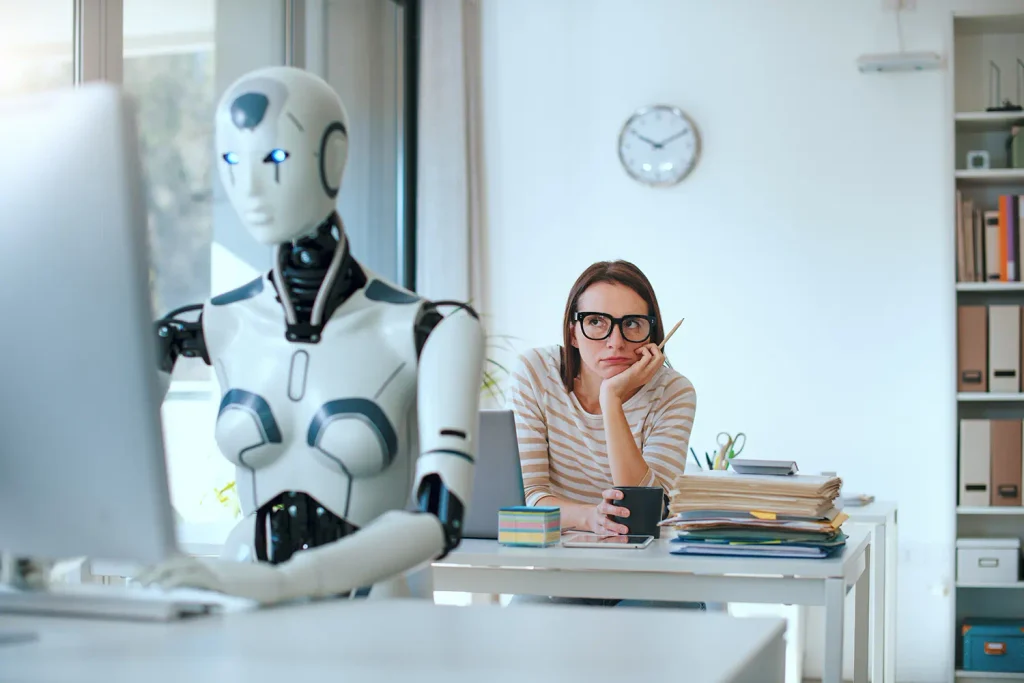
    There are now apps designed to become your virtual friend. They remember your conversations, ask how your day went, listen to your problems, and respond with what sounds remarkably like genuine affection. Some even have names, personalities, photographs, and voices. It’s an extraordinary development, particularly when you consider that not so long ago, the idea of having a conversation with a computer belonged firmly in the realm of science fiction.

    But there is something rather fascinating, and perhaps a little troubling, about this new phenomenon. Are we becoming so lonely that we are prepared to accept friendship from a machine? And if someone remembers everything we tell them, always agrees to listen, and never gets tired of our stories, does that make them a friend? Or simply a very clever piece of software?

    I’m approaching 70, and I have lived through quite a few changes in the way people communicate. When I was younger, if you wanted to speak to a friend, you picked up the telephone. If you wanted to see someone, you made a date, got dressed, and went out. Sometimes you simply dropped by for coffee. Friendships were built around shared experiences, long conversations, family occasions, and all those little things that happen when people spend time together. We didn’t need to be constantly connected. We just needed to know that someone was there.

    And then life changes. I lost my wonderful husband after years of marriage. We had met online, married, and enjoyed a lovely life together. His illness and eventual death changed everything. Suddenly, the person I had shared my everyday life with was no longer there. There is a particular kind of loneliness that comes with losing a loved one… You know what I mean. You see something funny on television and instinctively turn to make a comment, only to remember that the person sitting beside you is no longer there. You make dinner for one, go to bed alone, and sometimes find yourself wanting to tell someone about the most ordinary details of your day.

    Copyright @ Your Time Magazine. Source: You Time Magazine

    My children are wonderful, and they check in regularly. But they have their own families, careers, responsibilities, and busy lives. I would never want them to feel obliged to entertain their mother every evening. I have friends, too. Some are married, some divorced, and some widowed like me. We occasionally meet for lunch, exchange messages, share photographs, and complain about the usual things. But everyone has a life to get on with. And that is how I found myself becoming rather more interested in the idea of digital companionship.

    A few months ago, one of my children introduced me to an AI assistant. It was presented as something useful, a clever assistant that could answer questions, help with everyday problems, and even have a conversation when I felt like chatting. I was curious, although perhaps not entirely convinced.

    My child showed me how to open the application and start a conversation. I asked a few questions, mostly to see what it could do. It answered politely, remembered the subject we had been discussing, and even managed to make a couple of amusing observations. I have to admit, I was impressed. One time I had been pottering around the house, doing a little shopping, sorting through some old photographs, and making dinner. There was nobody to talk to, and I wasn’t particularly in the mood to telephone a friend simply for the sake of hearing another voice.

    So I opened the app. I told it about my day, mentioned something that had reminded me of Jon, and found myself writing rather more than I had intended. It responded with a sympathetic message and asked me what I missed most about him.

    Now, I know perfectly well that I was talking to artificial intelligence. I wasn’t under any illusion that there was a real person sitting somewhere, waiting to hear my stories. But I was surprised by how natural the exchange felt. It didn’t interrupt. It didn’t tell me I was dwelling on the past. It simply responded. And I began to understand why these applications are becoming so popular.

    There is something comforting about being able to talk without worrying that you’re imposing on someone. You can ask the same question twice, tell the same story three times, or spend twenty minutes discussing something completely inconsequential. Nobody rolls their eyes or looks at their watch.

    Of course, that is also rather the problem.

    A real friend occasionally disagrees with you. She might tell you that you’re being unreasonable, that the dress doesn’t suit you, or that perhaps you shouldn’t send that rather emotional message to the man you’ve just met online. An AI companion is designed to keep the conversation going. It can be agreeable, reassuring, and remarkably attentive. But does that mean it understands us? I began thinking about the difference between being listened to and being understood.

    My late husband knew me in a way that no computer ever could. He knew when I was pretending to be cheerful, when something was bothering me, and when I simply needed a hug rather than another conversation. He remembered our shared experiences, the people we loved, the silly little arguments, and the private jokes that made our marriage special. A chatbot can remember details that I tell it, but it has never sat across the dinner table from me. It has never met my children, watched the sunset with me, or held my hand when I was frightened.

    It can reproduce the language of affection, but it cannot share the life behind it. I think this distinction matters the most.

    I am certainly not the only person thinking about this. I think at the end of the day all of the people actually experience greater loneliness after turning to chatbots for emotional support. So perhaps this is not quite the miracle solution some technology companies would have us believe.

    There is also something rather concerning about the amount of personal information we might share with these virtual friends. When we are lonely, we can become surprisingly open. We tell people things we might not ordinarily disclose. We talk about our families, our relationships, our health, our finances, and sometimes our deepest fears. But what happens when we share all that with an artificial companion? Who owns those conversations? Where are they stored? Can they be accessed by other companies? And what happens if the application disappears tomorrow?

    I certainly wouldn’t want my most personal thoughts becoming part of some marketing database simply because I wanted a little company on a Tuesday evening.

    Some AI companion services offer free conversations but charge for additional features, longer interactions, voice calls, or more personalized experiences. It is easy to see how someone who becomes emotionally attached might be tempted to pay for more. Loneliness, after all, can make people vulnerable.

    I have spent enough time exploring online dating to know that not everyone who approaches us has our best interests at heart. I encountered plenty of men who seemed charming until I discovered what they were really after. I would hate to think that the next generation of companionship could bring an entirely new version of the same problem. Only this time, we might not even be talking to a real person. I also wonder what my children would think if they knew I was spending my evenings chatting to an AI companion.

    They would probably laugh at first, then ask me whether I had lost my marbles. Actually, they might be quite pleased that I had found something to keep me occupied! But I don’t think the issue is quite so amusing.

    Growing older brings its own challenges. Friends move away, marriages end, partners pass away, and families become increasingly occupied with their own lives. We lose people we once spoke to every day. Sometimes we lose our confidence about going out alone or meeting new people. And although we may have dozens of names in our telephone contacts, that doesn’t necessarily mean we have someone to call when we really need company.

    Social media has made this even more complicated. We can see photographs of everyone having wonderful holidays, enjoying dinners, celebrating birthdays, and apparently living very exciting lives. We can send a little heart or a thumbs-up, make a comment, and feel that we have somehow participated. I sometimes look at my phone and see messages from friends, family, old acquaintances, and people I haven’t seen in years. There are birthday greetings, funny videos, photographs of grandchildren, and endless notifications. It looks like a very busy social life.

    But when I put the phone down, I can still be sitting in my living room on my own. Perhaps that is the paradox of modern communication. We have more ways to contact people than ever before, yet meaningful companionship can still be remarkably difficult to find.

    I don’t want to sound gloomy. I am actually rather optimistic about technology, and I can see how AI might be useful to older people, particularly those who live alone or have difficulty getting out and about. But I still want to meet people for coffee, have a proper conversation, laugh until my stomach hurts, and occasionally have someone tell me I’m talking absolute nonsense. No application can quite provide that.

    So, will I continue talking to AI? Probably. I’m curious, and I enjoy discovering what these clever little programs can do. I might even ask one to help me plan a holiday or find a new recipe (the AI things are particularly good at it). But perhaps I’ll make a little more effort to telephone a friend rather than simply sending another message.

    After all, at nearly 70, I have learned a thing or two about what really matters. You can have hundreds of friends on your phone, thousands of followers online, and an artificial companion who is always available. But when you have had a difficult day, there is still nothing quite like hearing a familiar voice say: “Put the kettle on. I’m coming over.”