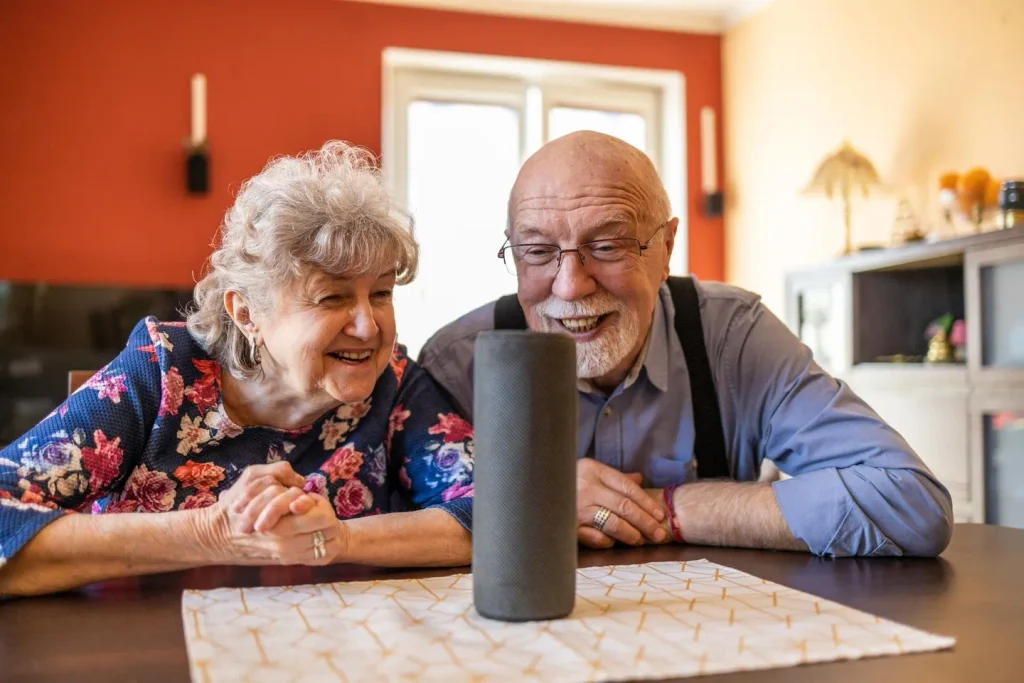
Even organizing our daily lives is no longer a simple matter of writing things down in a diary. We now have intelligent planner apps that promise to remember everything for us, organize our schedules, manage our priorities, and generally make us more efficient human beings. It sounds wonderful, doesn’t it?
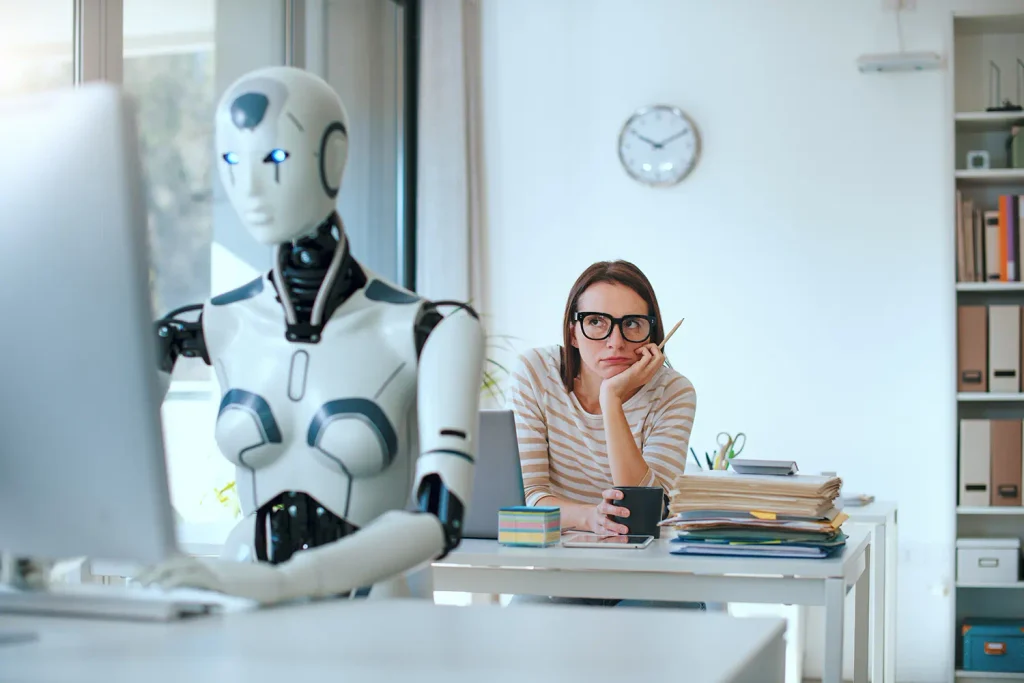
After all, who wouldn’t appreciate a little help keeping track of appointments, birthdays, shopping lists, bills, and all those countless little things that seem to accumulate as we get older?
But there is another side to this increasingly popular technology. Some AI-powered planner apps have raised questions about how much personal information users are sharing, who gets access to it, and what happens to the private details of our lives once they enter the digital world.
One example is Planye, whose privacy disclosures describe how information shared with its AI assistant may be processed by external service providers.
Now, I’m not suggesting that every planner app is doing something sinister. But I do think we need to ask a few questions before handing over the contents of our lives to a clever little piece of software. There is something rather unsettling about the idea that an app designed to help us organize our lives might also become a record of our most personal information.
And that brings me to the us, older generation 😉
I grew up in a world where organizing your life meant keeping a diary, writing appointments on a calendar, and perhaps sticking a shopping list on the refrigerator (and I still do all of those things). If you wanted to remember someone’s birthday, you wrote it down. If you had an important appointment, you circled the date. It isn’t particularly sophisticated, but it worked. And, more importantly, nobody was collecting our information.
When my children first started encouraging me to use digital planners, I have to admit I was a little sceptical. They seemed to think that everything in life could be solved by downloading an app. Whenever I mentioned forgetting an appointment or misplacing a shopping list, one of them would immediately suggest another clever little application. “Mum, you really should try this. It does everything for you!” And so, being a reasonably cooperative mother, I gave it a go.
At first, I needed quite a bit of help. They patiently showed me how to download the app, create an account, set reminders, and synchronize everything with my phone. I remember one afternoon sitting at the kitchen table with one of them, trying to work out why my appointments weren’t appearing where they were supposed to. After several attempts, a few exasperated sighs, and rather more instructions than I cared to remember, we finally got it working! I was simply relieved that I hadn’t accidentally signed up for something I couldn’t get out of!
Before long, I was entering appointments, making lists, and experimenting with reminders. It was quite satisfying, actually. I could see why younger people loved these things. Everything was in one place, and I no longer had to rummage through handbags looking for a scrap of paper with someone’s telephone number scribbled on it. My children were rather pleased with themselves, too. They had successfully brought their prehistoric mother into the digital age.
But then came the subscriptions, the permissions, the endless notifications, and all those little boxes asking me to agree to things I didn’t entirely understand. Whenever I asked my children what something meant, they would casually tell me to click yes and carry on.
“It’s fine, Mum. Everyone does it.”
Well, perhaps everyone does, but that doesn’t necessarily make it a good idea.
One day, I started wondering just how much information these apps were collecting. I had entered personal appointments, family birthdays, reminders about bills, and various private notes. Nothing particularly exciting, but certainly nobody else’s business. It occurred to me that my little digital diary might know rather more about my everyday life than some of my friends and family did.
We are encouraged to put everything into our phones. We are told that technology will make everything easier, and perhaps it does, I think.
But I sometimes wonder whether we’ve become a little too trusting.
And I’m certainly not alone. Many women in their sixties and seventies are learning to navigate a world that has become almost entirely digital. We learn to shop online, pay bills electronically, arrange medical appointments through portals, and communicate with family through Facebook.
Some of us have become quite proficient I would say.
But the truth is that we have little choice. There is also something to be said for the way these apps encourage us to become increasingly dependent on them. We have reminders for appointments, reminders to exercise, reminders to drink water, reminders to take breaks, and reminders to go to bed.
Good grief! Whatever happened to simply living?
The world has moved on, and we have to move with it. What concerns me is that convenience seems to come with an ever-growing price.
I remember when my children were little, I had an entire household to organize without the assistance of an electronic device. School runs, shopping, meals, appointments, birthdays, homework, and all the usual family chaos. Somehow, I managed to keep everything going with a wall calendar, a notebook, and a reasonably good memory.
I certainly wasn’t always organized, but I don’t recall needing an app to tell me when to put the washing on.
Perhaps I’m being unfair. Life has become more complicated, and technology genuinely can make things easier. I appreciate that. But I also think we have reached a point where convenience sometimes comes at the expense of common sense.
And what about our privacy?
When I was younger, if I wanted to tell someone something personal, I chose whom to tell. If I wrote something in my diary, it stayed in my diary. I didn’t have to wonder whether a third-party company might process it, store it, or use it in ways I hadn’t anticipated.
Nowadays, we click through pages of terms and conditions without reading them. We grant permissions because we want to get on with whatever we were trying to do in the first place.
I suspect many younger people do exactly the same.
My children are considerably more comfortable with technology than I am. They can navigate applications, change settings, synchronize devices, and troubleshoot problems without batting an eyelid. But even they don’t always have the patience to read the small print.
Perhaps they see it differently. They are accustomed to apps knowing where they are, what they like, what they buy, and what they search for. Sharing information has become part of everyday life. For those of us who remember a time when privacy was simply the natural state of affairs, this can feel like a rather extraordinary change.
I don’t particularly want an app knowing everything about me. I certainly don’t need an artificial intelligence assistant reminding me that I’m supposed to be productive, exercise more, drink more water, and get to bed earlier.
I’m quite capable of feeling guilty about all those things without technological assistance!
There is also something to be said for doing things the old-fashioned way. As I said, I do still appreciate writing things down, making notes in the margins, and keeping a little control over my own schedule. There is a certain pleasure in opening a notebook and seeing your own handwriting rather than being greeted by another notification.
Perhaps I’m old-fashioned. But I don’t think wanting something only for myself is old-fashioned at all.
Technology should be there to serve us, not the other way around. And while I appreciate that AI can help us manage increasingly complicated lives, I would like to think that we can still decide what information we share and what we prefer to keep to ourselves.
My advice? Before downloading the latest clever planner promising to transform your life, take a moment to read its privacy policy. Find out what information it collects, whether it shares data with outside companies, and how you can delete your information if you decide to leave.
Because organizing your life should not mean giving someone else a window into every corner of it.
I’ll keep my calendar, my shopping lists, and my little notebook for now. At least I know exactly where they are, and nobody needs a password to read them.
And if I forget an appointment, well, that’s my business!